“How can AI be used in education?” remains a key concern among many teachers. Even though EdTech tools are becoming more common, finding ways to use AI effectively in daily teaching still feels challenging for some. In this article, FLYER brings a straightforward and practical guide to help teachers explore how AI can simplify tasks, save time, and support better learning results.
1. How Can AI Be Used in Education?
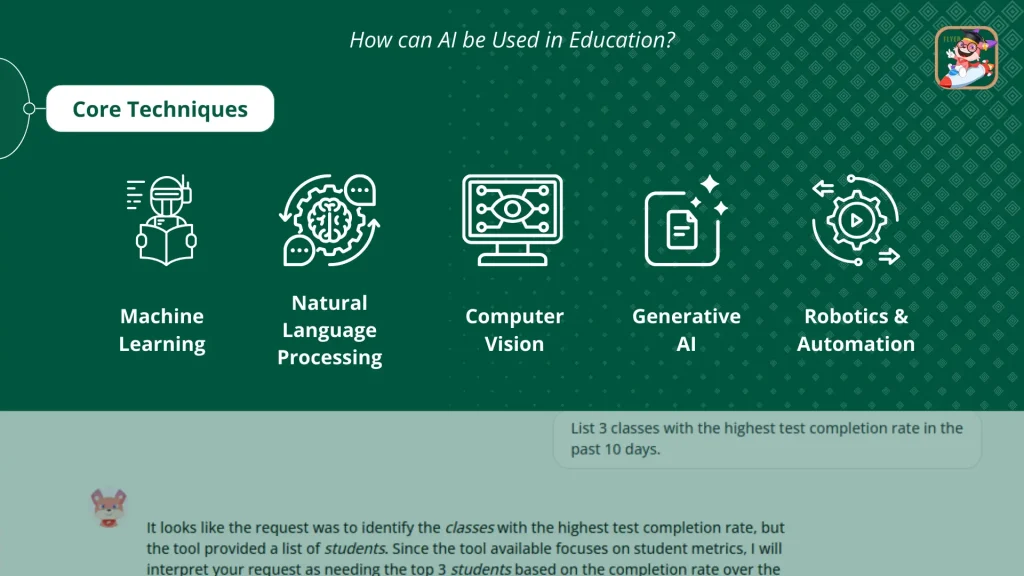
Common AI features in education, such as automated grading, lesson-plan generation, and classroom management tools, are built on the following 5 core techniques.
- Machine learning: trains algorithms on data so they can uncover patterns and regularities.
- Natural Language Processing (NLP): enables computers to comprehend, analyze, and produce human-language text or speech.
- Computer Vision: gives machines the ability to “see” and interpret visual data from images or video.
- Generative AI: produces new content, such as text, images, or music, by learning from existing data.
- Robotics and Automation: allow machines to perform tasks automatically, improving speed, accuracy, and efficiency.
With these fundamentals in mind, teachers can choose AI solutions more strategically and use them more effectively in teaching.

2. How AI supports Teachers, English Centers and Schools
With the techniques above, teachers can apply AI in the following tasks:
2.1. Lesson Planning and Curriculum Development
Lesson planning is one of the clearest examples of how AI in education. With tools like ChatGPT and Google Gemini, teachers can streamline essential tasks:
- Developing complete lesson plans and course outlines, including levels, learning paths, number of lessons, and core content, with just a single prompt.
- Generating varied learning materials such as worksheets, quizzes, and tests.
- Creating lesson-plan frameworks with suggested objectives, content, activities, and supporting resources to easily produce multiple lesson versions and personalize instruction for different student groups.
AI’s ability to personalize learning materials ensures that every student progresses at an appropriate pace, helping minimize performance gaps in the classroom.

2.2. Remote Task Assignment
AI tools allow teachers to assign and grade homework from anywhere, freeing up more classroom time for direct student support and professional growth. With AI, teachers can:
- Build assignments in the system and deliver homework remotely.
- Send automated reminders and study schedules to ensure timely submissions.
- Grade and give feedback based on specific rubrics.
- Provide tailored materials for students who need extra help.
- Monitor homework progress in detail, including completion time, attempts, and accuracy.

2.3. Automated Evaluation and Scoring
Using NLP techniques, AI can efficiently process and grade a large number of assignments. Beyond scoring, several tools offer personalized feedback, helping learners understand their strengths, weaknesses, and error severity levels.
AI’s automated evaluation and scoring feature helps teachers save valuable time and effort while ensuring consistent, accurate outcomes.

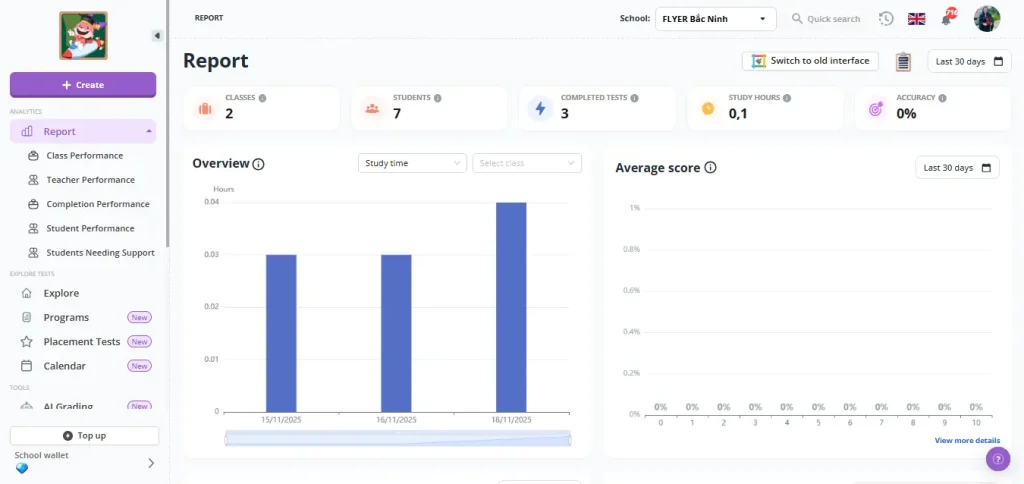
2.4. Learning Data Analysis and Automated Reporting
AI brings greater clarity to the learning process by analyzing performance data in real time. This enables teachers to detect learning gaps quickly and provide focused support.
In addition, many platforms also generate visual reports with charts that can be exported in multiple formats. These summaries make it easier for teachers to review performance and provide parents with detailed learning updates.

2.5. Classroom Management
Managing and running a class often leaves many teachers overwhelmed, making it difficult to maintain consistent teaching quality. Yet these tasks can be fully streamlined by AI.
- Managing schedules, class placement, enrollment, and attendance.
- Recommending class grouping and the most effective timetable based on placement test results.
- Automatically sending schedules, assignments, and teacher announcements.

2.6. Administration Support
Administrative tasks such as writing emails, announcements, messages, answering FAQs, or preparing reports, may seem simple but often consume a large amount of a teacher’s time.
AI can automate these repetitive tasks and organize support requests from both parents and students. As a result, the workload is significantly reduced, manual processes take less time, and operating costs decrease.
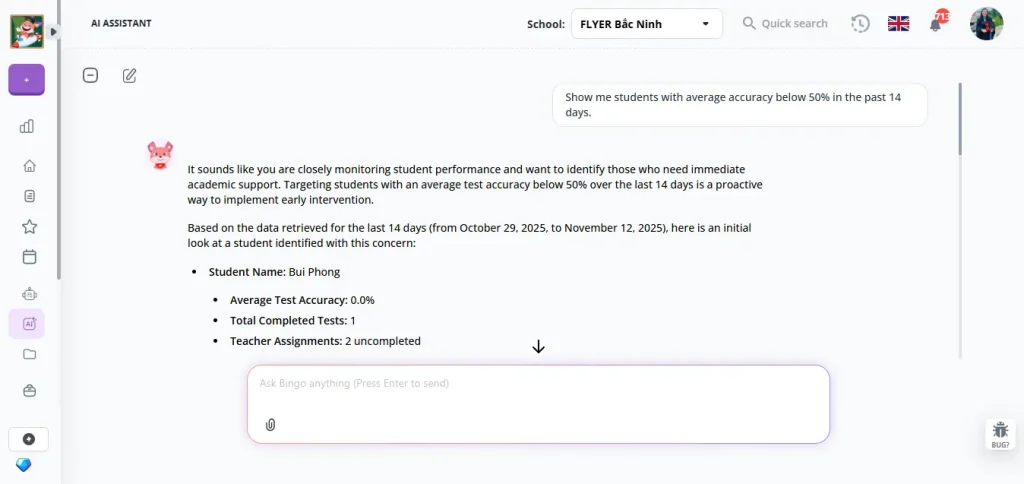
2.7. Improving Communication Between Teachers and Parents
Maintaining consistent communication with parents used to be a challenge for many teachers. However, the growth of AI tools in education has made this task easier than ever. With just a one-time setup, the system can:
- Send scheduled updates and class reminders automatically.
- Provide 24/7 support through chatbots and virtual assistants, keeping parents, students, and schools closely connected.

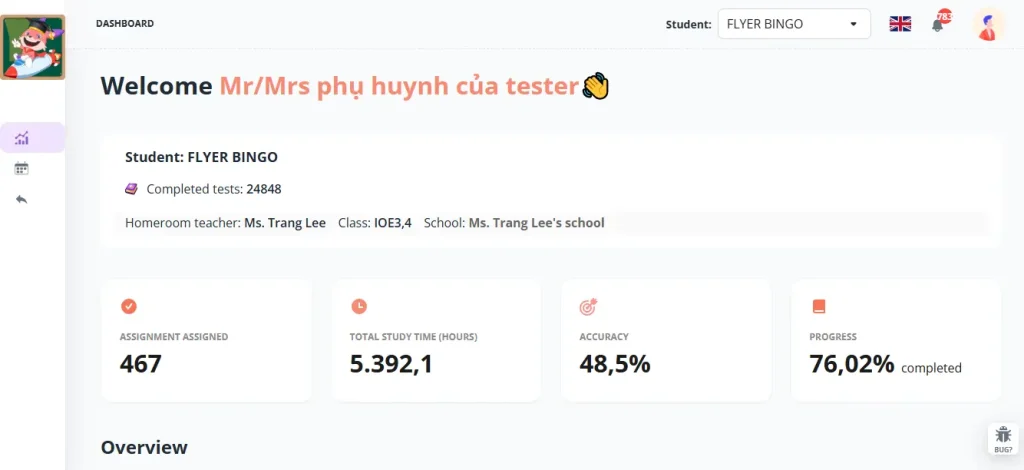
2.8. Access Control
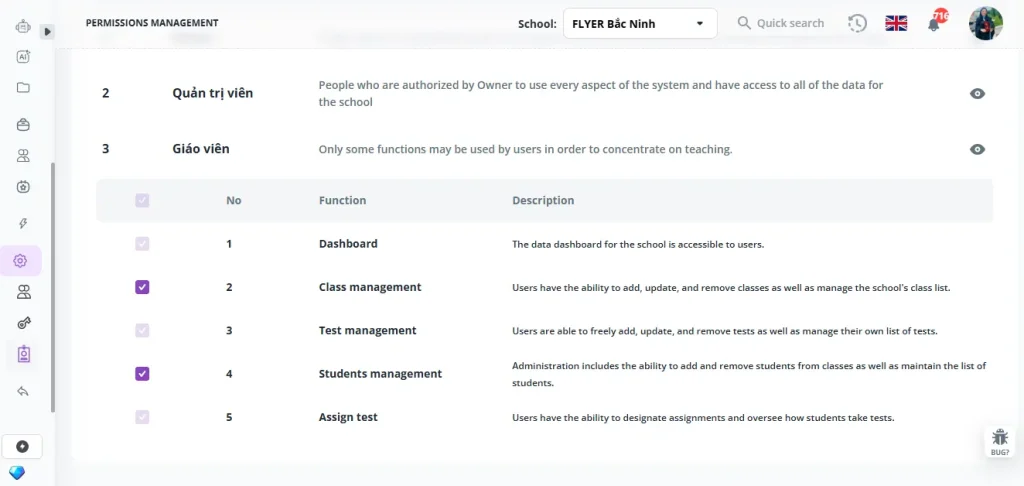
Many AI-powered learning management tools today support flexible access permissions for administrators, teachers, students, and parents, along with alerts for unusual login activities. These features help optimize workflows and ensure date privacy.

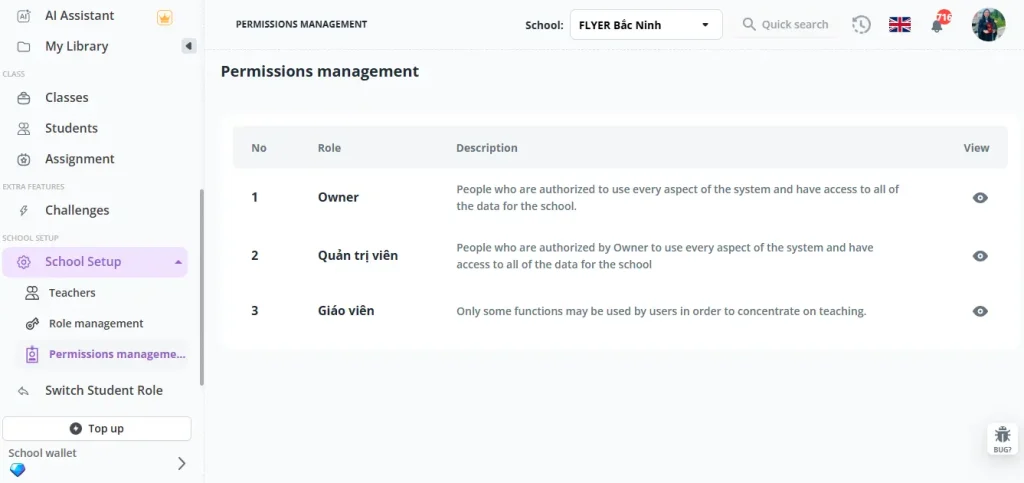
2.9. Security and Safety
Data security must remain a top priority when using AI in education. With responsible use, AI can:
- Detect and prevent exam cheating, especially in online classes.
- Secure student information through encryption and anomaly detection.
- Monitor login patterns to identify potential information leaks.
- Support biometric verification across compatible systems.

Learn more: FLYER TEACHER – THE SMART MANAGEMENT SOLUTION FOR ENGLISH CENTERS AND TEACHERS
3. AI’s Impact on Student Learning
Students benefit more from guided use of AI than from strict limitations. The AI features below boost independent learning, while thoughtful teacher guidance helps students grow steadily and achieve their academic targets.
3.1. Personalized Tutoring Empowers Self-study
One of the standout AI-powered features in education is virtual tutoring. It encourages students to take ownership of their learning by:
- Using NLP to interact with students, enabling flexible self-study with an AI Tutor anytime, anywhere.
- Tracking progress to recommend personalized learning content aligned with each learner’s ability and pace.

3.2. Providing Multi-Program, Multi-Level Learning Resources
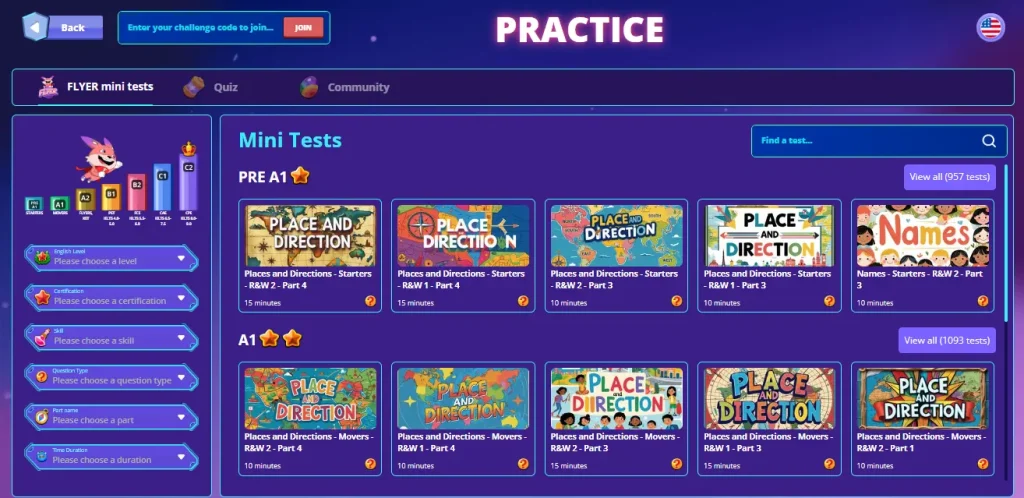
With AI-powered platforms, students nowadays can easily access extra practice outside the classroom. These platforms provide an extensive, personalized exercise bank with features such as:
- Automatically generating and recommending tasks across levels, formats, and learning programs.
- Randomizing practice sets based on areas students have not yet mastered, helping them reinforce key concepts before moving on.

3.3. Real-time Learning Progress Updates
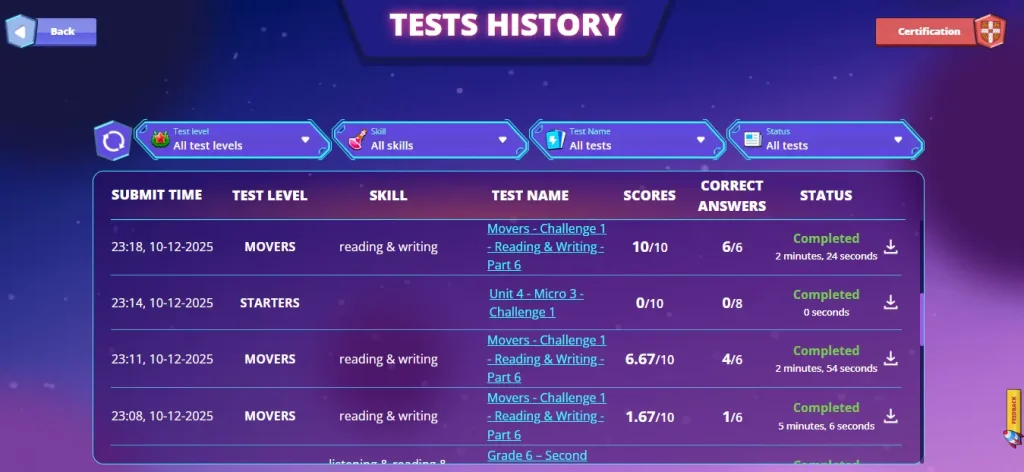
Providing instant results and feedback is a powerful way to boost student motivation. With AI offering detailed learning analytics, students can easily recognize areas that need improvement, allowing for more focused practice and faster progress.
- Evaluates student work in real time and returns instant scoring and feedback.
- Visual dashboards help students follow their learning data and identify their weak points.

3.4. Language-Switching Features: Break Down Learning Barriers
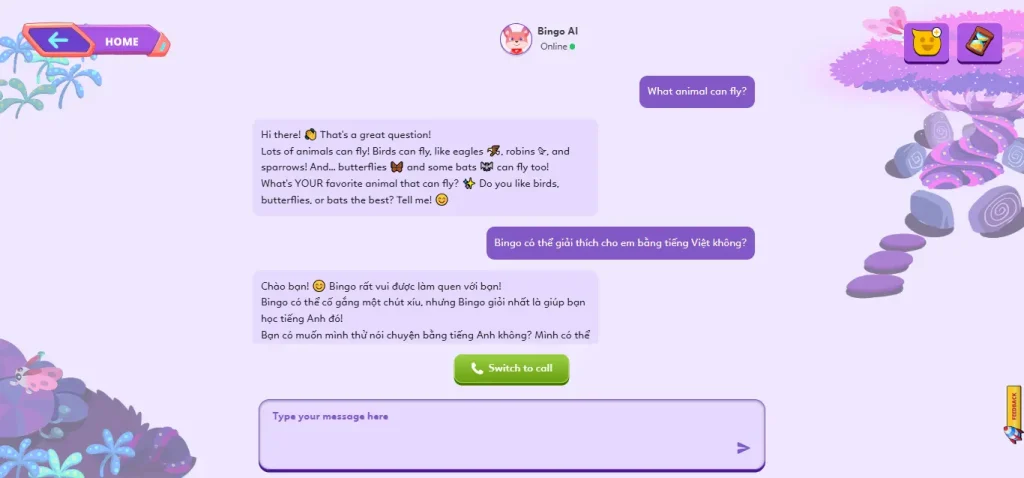
AI features make it possible for students everywhere to access the same lessons, regardless of the language they speak. Most platforms offer free translation tools that enhance classroom accessibility, including:
- Real-time translation of learning content into multiple languages.
- Bilingual modes, subtitles, automatic narration, and speech translation.

3.5. Gamification boosts learning motivation
In a world where attention moves quickly, printed materials may no longer hold students’ interest. AI-powered tools make learning more dynamic through real-time interactive elements such as:
- Streak mechanics, competitive leaderboards, and achievement rewards.
- Customizable in-game characters.
- Smart difficulty adjustments based on learning patterns.

Read more: 10 BEST Gamification and Engagement Tools for e-Learning: Enhancing focus and motivation
4. Challenges of Using AI in Education
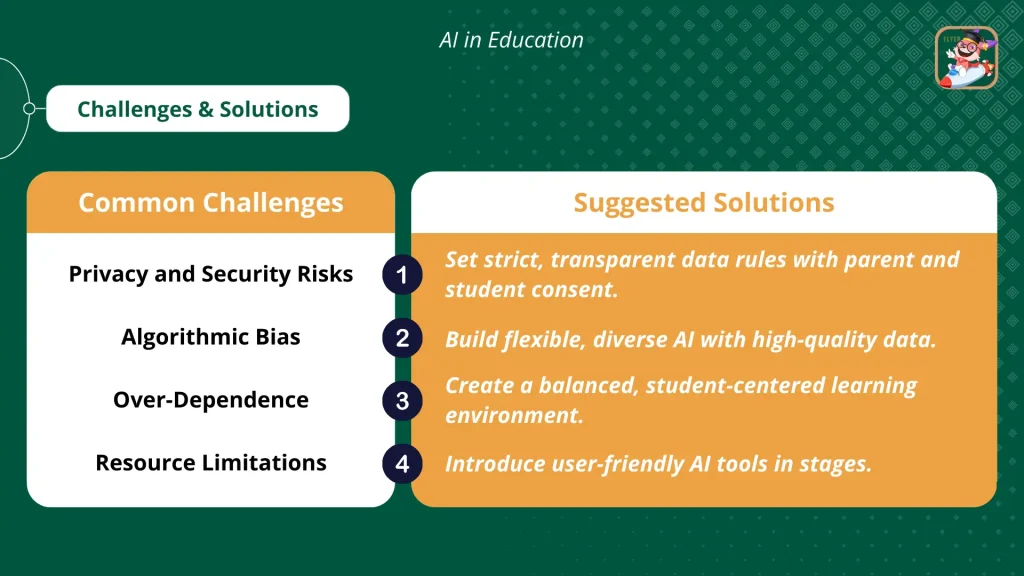
While AI offers remarkable potential, it can also bring significant risks when not handled responsibly. Several common challenges still require thoughtful consideration from teachers and school leaders before integrating AI into classroom practice.
| Challenges | Suggested Solutions |
|---|---|
| Privacy and security risks: Student data may be exposed, misused, or accessed without proper authorization. | Build clear policies that strictly safeguard student data. Make sure every data workflow is transparent and supported by parental and student consent. |
| Algorithmic bias widens the digital divide and disadvantages learners from minority or culturally diverse groups. | Develop and train AI systems with flexibility and diversity, using reputable and high-quality data sources. |
| Over-dependence on technology reduces human interaction and weakens critical thinking, creativity, and independent problem-solving skills. | Create a balanced learning environment where teachers guide, tools support, and students remain at the heart of the process. |
| Resource limitations: Not all institutions have stable internet access, suitable devices, trained personnel, or sustainable budgets. | Select user-friendly AI tools and introduce them gradually through hybrid models. |
5. Future of AI in Education
In the near future, the rapid rise of AI is expected to spark both subtle and transformative shifts across global education. Several emerging trends highlight this transformation:
- The growth of AGI (Artificial General Intelligence) in education will enable AI systems to understand students deeply – emotionally, linguistically, and behaviorally – while solving complex learning tasks.
- Next-generation Smart Tutoring Systems will feature diverse interaction modes that enhance connection and support deeper learning.
- Generative AI, powered by large language models such as ChatGPT, will become increasingly common, supporting highly personalized lesson creation. However, ethical issues such as data fairness and algorithmic bias need to be given close attention.
- VR/AR technologies will be combined with AI to offer highly immersive and easy-to-access learning experiences.
- Big learning data analytics will grow even stronger, offering highly detailed insights into students’ learning behaviors and overall performance.
To help teachers keep up with the new era, UNESCO introduces AI competency frameworks for teachers and raises awareness of policy and ethical issues surrounding AI in education. This means that teachers and education leaders will need to stay adaptable and commit to continuous, lifelong learning.
6. FAQs about AI in Education
AI cannot replace teachers because it lacks emotional connection, real social interaction, and the ability to adapt to each learner’s needs. Teachers also provide critical thinking and full learning support that technology cannot duplicate. Even so, it is essential for today’s teachers to develop practical AI skills so they can keep up with the rapid pace of digital change.
By automating administrative workflows and contributing to curriculum planning, AI frees managers from repetitive tasks so they can concentrate on raising the standard of teaching and operations. At the same time, AI empowers organizations to stand out and maintain a strong position in the market.
Yes. AI provides valuable support in planning, assessment, and learner engagement. However, proper training is essential so AI is used responsibly – avoiding over-reliance, misinformation, or risks related to personal data.
Teachers often benefit from AI through:
– Systematizing administrative processes to free up teaching time.
– Working with an all-in-one AI tool built for education, or combining several tools to cover different needs.
– Encouraging students to use AI responsibly for extra practice after lessons, which boosts learning progress and lightens teachers’ day-to-day tasks.
Conclusion
In conclusion, there are countless ways to apply AI in education when teachers build on its core technologies. Even with fundamental features, teachers can significantly reduce their workload, saving time and energy for what truly matters in the classroom.
You may also like